Engagement Data & SSO Logins
This article explains why you may see a difference between active and inactive app user percentages when comparing data collected from Engagement connectors versus SSO Logins.
- Engagement Data vs. SSO Logins
- Why is there a Discrepancy in the Active Percentages?
- What's the Reason for Inaccurate SSO Usage Data?
Engagement Data vs. SSO Logins
It's important to note the following:
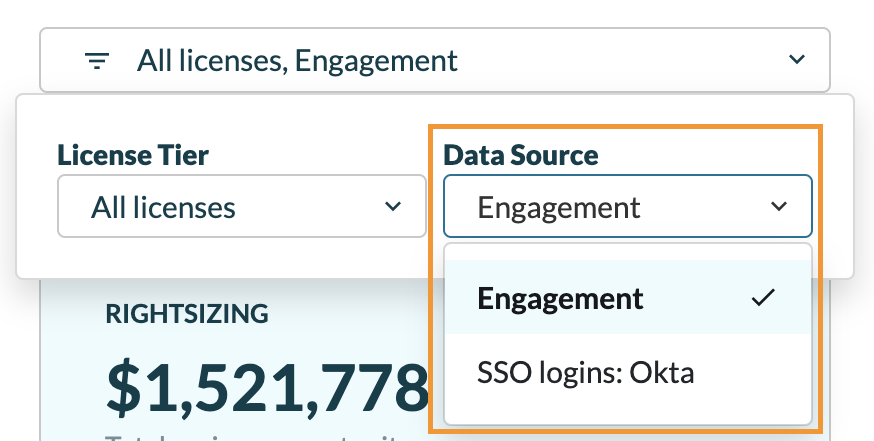
- Engagement data refers to the number of engaged users as well as provisioned users when the Engagement data source filter is selected on the Overview page of an application in Productiv.
- SSO logins data refers to the number of users who have SSO access to an app when the SSO logins filter is selected.
Why is there a Discrepancy in the Active Percentages?
Since Engagement and SSO logins consist of different metrics collected from different systems with distinct resolutions and implications, it's expected that the percentage is not the same.
This is mainly because SSO logins only track when a user is challenged to enter their username and password. Whereas engagement is tracked once a user interacts with the app.
Since the frequency of re-logging into an app is usually lower than the frequency of performing an action in that app (especially if the app doesn’t require you to re-login on a daily basis), it is not uncommon for SSO data to report fewer logins than engagement.
This is the main benefit of having engagement data as opposed to relying on SSO data to track app activity.
What's the Reason for Inaccurate SSO Usage Data?
Potential reasons for inaccurate SSO usage data include:
- Excessively long login timeouts: the SSO data only counts new logins for a given time period. If users are allowed to remain logged in for a period beyond the queried time period, users won’t show in the results.
- Another reason is logins could possibly be occurring via different methods (i.e., direct login, Google social login, etc.)